
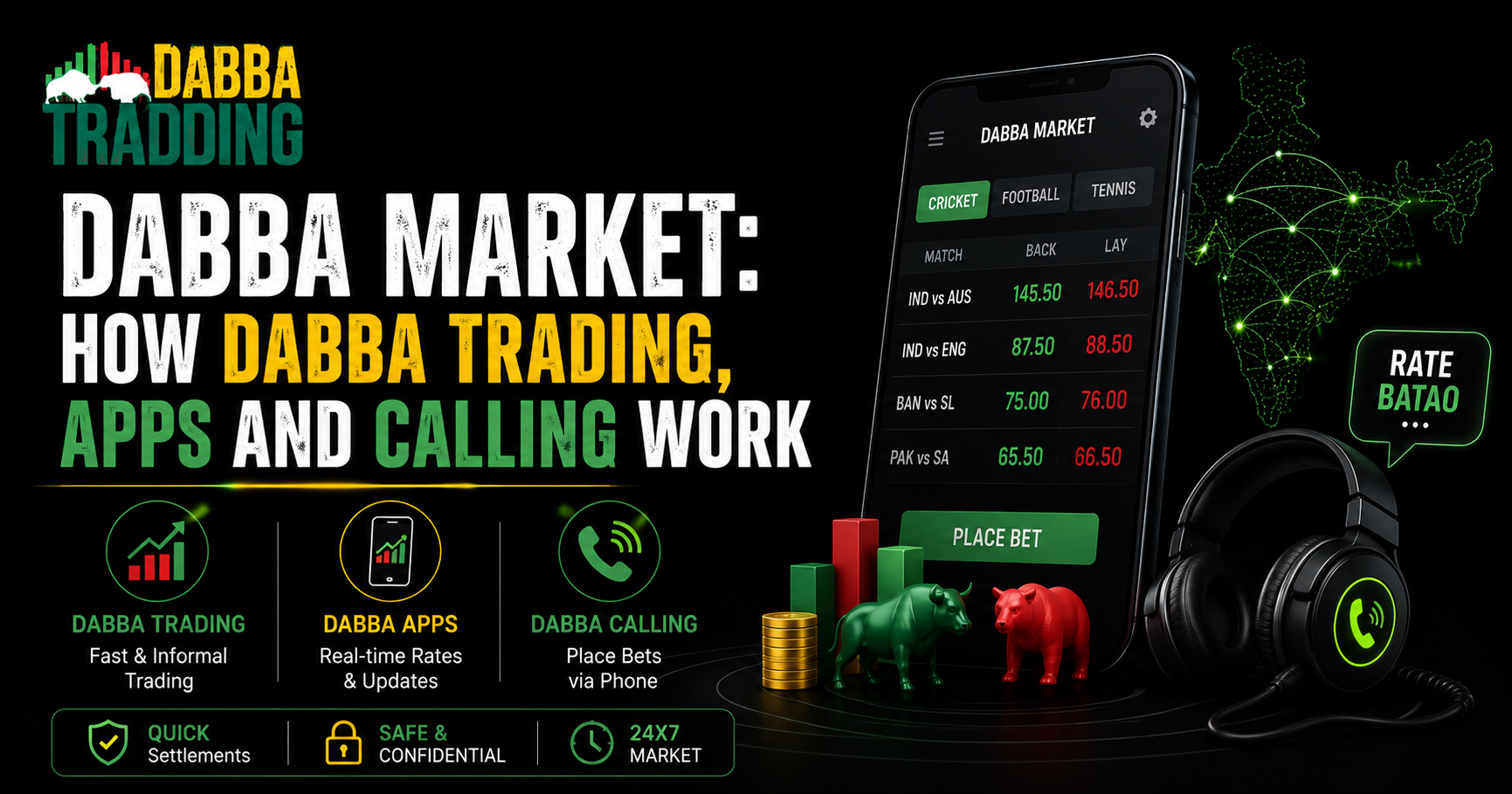
The Dabba Market is an informal trading system where transactions are generally recorded and settled outside recognized stock exchanges. Unlike conventional stock-market trading through a regulated broker, dabba arrangements typically involve an operator maintaining the customer’s trading positions internally.
The topic has gained attention as more people search for Dabba Trading App, Dabba Calling, and related online trading services. However, understanding how these systems work is important before considering any financial decision, particularly because unregulated trading can involve significant risks.
What Is the Dabba Market?
The Dabba Market refers to an unofficial trading arrangement in which customers place buy or sell positions with an operator without the trade necessarily being executed through a recognized stock exchange.
Instead of an exchange recording and clearing the transaction, the operator may maintain an internal record of the customer’s position. Profit or loss is subsequently calculated based on the relevant market price and settled between the customer and operator.
This makes dabba trading fundamentally different from conventional exchange-based investing.
How Does the Dabba Market Work?
The basic process can look like this:
- A customer contacts a dabba operator.
- The customer gives a buy or sell instruction.
- The operator records the position in an internal system.
- The position is valued according to the referenced market price.
- Any resulting profit or loss is settled privately.
For example, if a customer takes a position based on the price of a particular stock and that market price subsequently changes, the operator may calculate the difference and settle the amount with the customer.
The important distinction is that the transaction may not represent an actual exchange-traded position.
What Is a Dabba Trading App?
A Dabba Trading App is generally an online or mobile interface associated with an informal trading operation. Such applications may display market prices, account balances, open positions, or trading information.
However, having a mobile application does not mean that the service is regulated.
A professional-looking interface, website, or app should not be treated as proof that a platform is authorized to provide financial services. Before using any trading platform, users should independently verify the operator’s regulatory status and understand where and how their trades are executed.
What Is Dabba Calling?
Dabba Calling generally refers to calls or direct communications through which operators or individuals provide trading information, recommendations, or instructions.
A person may receive a call suggesting that a particular stock or market is likely to rise or fall. In some cases, the caller may encourage the customer to open a position through an informal trading arrangement.
Investors should be cautious when receiving unsolicited calls that promise:
- Guaranteed profits
- Highly accurate trading calls
- Risk-free returns
- Very high short-term gains
- Exclusive trading opportunities
Market prices can move unpredictably, and no genuine trading strategy can guarantee profits.
Dabba Market vs Regulated Stock Market
Understanding the difference between informal trading and regulated stock-market participation is essential.
| Factor | Dabba Market | Regulated Stock Market |
|---|---|---|
| Trade execution | May occur outside recognized exchanges | Executed through regulated market infrastructure |
| Regulation | May operate outside the applicable regulatory framework | Subject to financial-market regulations |
| Records | Often maintained by the operator | Formal broker/exchange records |
| Investor protection | Potentially limited | Established regulatory mechanisms |
| Counterparty risk | Can be high | Reduced through established systems |
| Transparency | Depends heavily on the operator | Subject to regulatory requirements |
The exact legal position depends on the jurisdiction and the specific activity involved, so users should refer to current information from the relevant financial regulator.
Why Are People Interested in Dabba Trading?
Interest in the Dabba Market can be driven by several factors. Some operators may promote their services by highlighting:
- Easy account setup
- Quick access
- High leverage
- Low apparent costs
- Personal trading assistance
- Frequent market calls
These features can appear attractive to inexperienced traders. However, convenience does not remove financial or legal risks.
Anyone considering an online trading service should investigate the provider independently rather than relying on promotional claims.
Risks Associated With the Dabba Market
Counterparty Risk
When trades and balances are maintained internally by an operator, customers can become dependent on that operator for accurate records and settlement.
If the operator stops operating or refuses to honor a settlement, recovering money may be difficult.
Lack of Investor Protection
Trading outside recognized and regulated market mechanisms may mean that customers do not receive the same protections available when using an authorized broker.
Fraud and Manipulation
Unregulated arrangements can create opportunities for misleading account balances, manipulated records, unexpected charges, or withdrawal problems.
Leverage Risk
Some informal trading operators may offer significant leverage. While leverage can increase potential returns, it can also increase losses considerably.
Misleading Trading Calls
A caller may claim to have highly accurate predictions or insider information. Investors should treat such claims with caution because market outcomes cannot be guaranteed.
How to Verify a Trading Platform
Before opening an account or transferring money, consider the following checks:
1. Check Regulatory Registration
Verify whether the broker or intermediary is registered with the appropriate financial regulator.
2. Understand Trade Execution
Find out whether your orders are actually executed through a recognized exchange or another regulated market infrastructure.
3. Review Withdrawal Rules
Understand how deposits and withdrawals work before committing funds. Pay attention to fees, verification requirements, and restrictions.
4. Avoid Guaranteed Returns
Promises of guaranteed profits, fixed daily income, or completely risk-free trading should be treated as warning signs.
5. Research Independently
Do not rely only on testimonials, social-media posts, screenshots, or reviews published by the platform itself.
Is the Dabba Market Legal in India?
The Dabba Market is different from trading through a SEBI-registered intermediary and recognized Indian stock exchanges. Unauthorized trading arrangements can raise serious regulatory and legal concerns.
The applicable rules can depend on the precise nature of the activity and the parties involved. Therefore, anyone seeking to understand the current legal position should consult up-to-date information from official Indian financial regulators rather than relying on promotional websites or social-media discussions.
Frequently Asked Questions About the Dabba Market
What is the Dabba Market?
The Dabba Market is an informal trading arrangement where positions may be recorded and settled privately instead of being executed and cleared through a recognized stock exchange.
Is a Dabba Trading App a regulated trading app?
Not necessarily. An app’s appearance or functionality does not establish its regulatory status. Users should independently verify the service provider and how trades are executed.
What does Dabba Calling mean?
Dabba Calling generally refers to phone calls or direct communications used to provide trading recommendations, market information, or instructions connected with informal trading arrangements.
Is Dabba Trading safe?
Dabba trading can involve substantial risks, including counterparty risk, fraud, withdrawal problems, leverage-related losses, and potentially limited investor protection.
Can Dabba Trading guarantee profits?
No legitimate trading activity can guarantee market profits. Claims of guaranteed or risk-free returns should be treated with caution.
What should I check before using a trading platform?
Check the provider’s regulatory status, how trades are executed, fee structure, withdrawal process, risk disclosures, and official business information before depositing money.
Final Thoughts
The Dabba Market represents an informal approach to trading that differs significantly from participating in recognized and regulated financial markets. Searches for Dabba Trading App and Dabba Calling often reflect interest in how these services operate, but users should carefully evaluate the risks before taking any action.
For anyone considering online trading, regulatory status, transparency, investor protection, execution, and fund security should take priority over promises of quick profits or successful trading calls. Independent research and information from official financial authorities are essential when making financial decisions.